
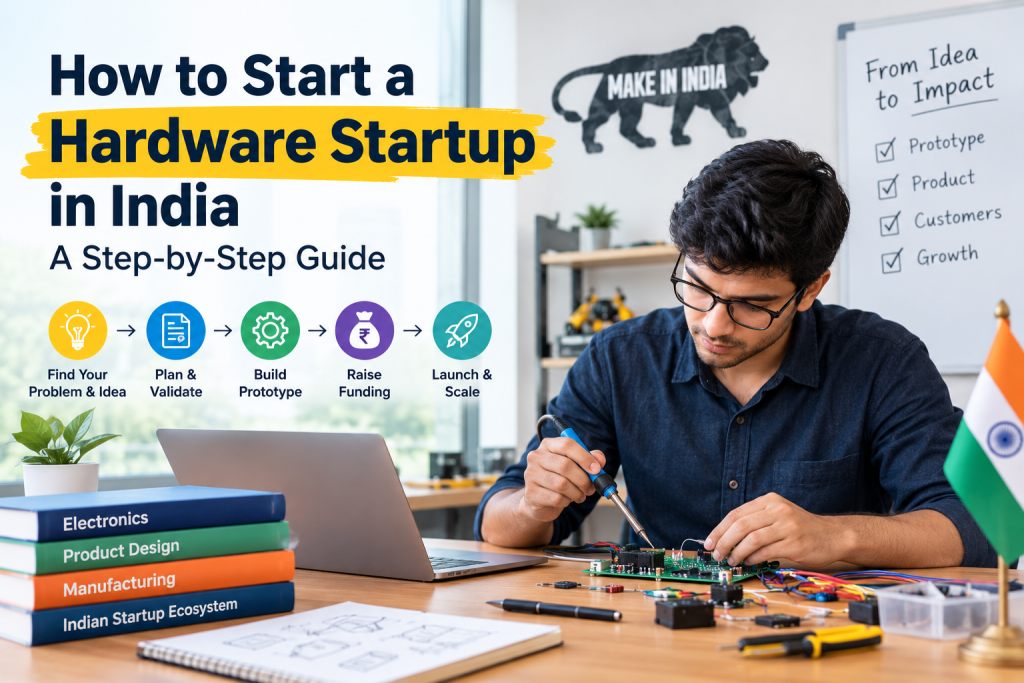
How to Start a Hardware Startup in India: A Step-by-Step Guide
Introduction India has more than a million startups in its ecosystem, yet most founders still build apps and websites. Building a physical product is a different game. You deal with factories, components, certifications, inventory and customers who can return a broken device. It is harder, but it also creates businesses that are very difficult to copy. If you want to launch a hardware startup in India, this guide gives you a practical roadmap from the first idea to your first batch of products. You will learn how to validate a problem, build a prototype, plan manufacturing, handle compliance, raise money and sell. You will also see the real pros and cons, a step-by-step chart and the mistakes that sink most first-time hardware founders. This guide is based on common patterns seen across Indian product startups, public government resources and the standard product development process used by electronics and consumer product teams. Rules and schemes change, so always confirm the latest details on official websites before you commit money. Quick Summary: What You Will Learn Why Hardware Is Different From Software Startups Before you start, understand what you are signing up for. A software founder can fix a bug in an hour and push an update to every user. A hardware founder cannot update a plastic enclosure that has already shipped. Here are the main differences: Why still do it? India is pushing local manufacturing through programs like Make in India and several production linked incentive schemes. Local demand is huge, and customers increasingly want products designed for Indian conditions, such as power fluctuations, heat, dust and price sensitivity. A good hardware product also builds a stronger moat than a typical app because competitors need real time and capital to copy it. Pros and Cons of Starting a Hardware Startup in India Be honest with yourself at this stage. This table gives a balanced view. Pros Cons Harder to copy, which builds a real competitive moat High upfront investment before first revenue Strong government focus on local manufacturing and startups Long development and certification timelines Large domestic market with growing demand for smart, affordable products Dependence on imported components and global supply chains Higher perceived value because customers get a tangible product Inventory, returns and warranty add cost and complexity Potential for recurring revenue with accessories, consumables or subscriptions Mistakes in design are expensive to fix after tooling Access to incubators, labs and grants built for deep tech and hardware Fewer investors who understand hardware compared to software Opportunity to export once the product is proven Quality control is hard when you scale How to read this table: If most of the cons worry you but you still feel strongly about your idea, start small with a narrow product and a pilot batch. If the pros excite you and you have a clear customer problem, you are probably a good fit. Step 1: Find and Validate a Real Problem The most common reason hardware startups fail is simple. They build a product nobody needs. Start with a pain point, not a gadget. How to find a problem worth solving How to validate before you build Mini checklist: Is your idea worth building? If you cannot answer yes to these, go back and refine the idea before spending on design. Step 2: Define Your Product and MVP A minimum viable product in hardware is not a half-finished product. It is the simplest version that solves the core problem well enough for early customers to use and pay for. Separate must-have features from nice-to-have features Write two lists. The first list contains features without which the product fails. The second contains features that would be good to add later. Ship only the first list in version one. Write a simple product requirement document (PRD) Your PRD should be two to four pages and include: Decide: hardware only, or hardware plus app and cloud? Adding an app and cloud service can unlock recurring revenue and data, but it also adds software development, server cost and security responsibility. Many successful founders launch hardware only first, then add connectivity once customers prove the need. Set your target cost early Work backward from the selling price. A common rule of thumb is that retail price should be a healthy multiple of your landed cost, because you must cover distribution, marketing, warranty and profit. Your bill of materials (BOM) is the list of all parts and their costs. Track it from day one, and revisit it at every design change. Step 3: Design and Prototype Prototyping turns your idea into something you can hold, test and show. Move in stages and test at each stage. Do not jump straight to the final product. Industrial and Product Design Good design is not only about looks. It decides how the product feels, how it is assembled and how much it costs to make. Think about: Many founders have strong technical skills but limited design experience. In that case, working with a specialist team early can save months of rework. Studio ID at studioid.in offers product and industrial design support for startups that want a manufacturable, market-ready design, and it is a useful place to start if you want an expert review of your concept. Electronics and Firmware This is the brain of your product. Key decisions include: Prototyping Methods Most teams follow this ladder: Each step costs more than the last, so only move forward when the earlier step works. Common Design Mistakes Step 4: Source Components and Plan the Supply Chain Component sourcing can make or break your timeline and cost. Local vs imported components Know these terms Reduce your risk Step 5: Manufacturing in India Once your prototype works and your design is frozen, it is time to plan production. Your manufacturing options Option Best for Pros Cons In-house assembly Very small batches, early pilots Full control, fast iteration Needs space, skilled staff and equipment Contract manufacturer (EMS) Scaling from pilot to volume Experience, quality systems, purchasing
Design for Manufacturing (DFM)
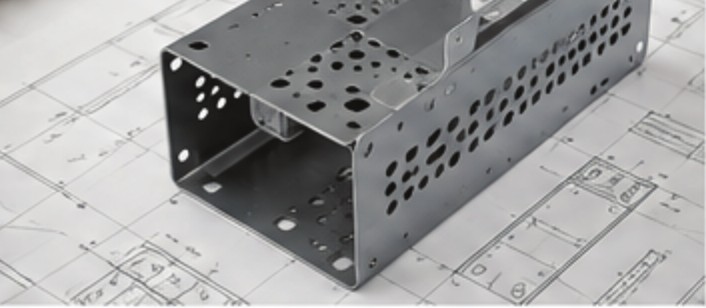
Design for Manufacturing (DFM) — Studio iD on how to design products that are buildable at scale: material choice, tolerances, assembly, cost and supplier handoff.