
12 Smart Home Product Ideas Indian Startups Can Build
Most smart home products on the market were designed for homes in the US or Europe. Indian homes are different. We deal with voltage swings, daily power cuts, overhead water tanks, split ACs, rented flats, and families where one phone is shared by three people. When a product ignores these facts, it ends up in a drawer. That gap is your opportunity. If you are a founder, inventor, or engineer looking for smart home product ideas that fit Indian homes, this guide is for you. Below you will find 12 ideas, each with the problem it solves, what the product looks like, honest pros and cons, and who is likely to buy it. This article also covers how to choose an idea, what it takes to build and certify a device in India, and how to test demand before you spend money on tooling. Every idea here comes from real, everyday problems in Indian households. Where we mention costs or rules, we point you to the official source so you can verify the latest details. Why India Is a Good Market for Smart Home Hardware India is not a copy of any Western market. That is exactly why local founders have an advantage. Here are the main reasons the timing is good. 1. Most buyers live in existing homes. Very few people in India move into a fully automated new build. Most want to upgrade a home they already own or rent. This favors retrofit products that install in minutes without rewiring. 2. Smartphones and broadband are everywhere. Fast home internet and low-cost smartphones are now common in metro cities and growing in tier 2 and tier 3 towns. Your customer already has the remote control in their pocket. 3. Local problems need local solutions. Power cuts, water storage, pollution, and electricity bills affect millions of homes. A product that fixes one of these pain points has a clear reason to exist. 4. Price sensitivity creates room for new brands. Many imported smart devices cost too much for the average Indian buyer. A well-priced local alternative can win trust quickly. 5. Electricians and builders influence buying. In India, the local electrician often recommends what gets installed. Startups that win over installers get a powerful sales channel. Tip for founders: before you quote any market size, check a recent and named industry report. Numbers on smart home adoption change fast, so avoid repeating old figures. 12 Smart Home Product Ideas for Indian Startups Each idea below follows the same simple pattern: the problem, the product, the pros and cons, and the likely buyer. Difficulty ratings are our general estimates and will vary with your team and budget. 1. Smart Water Tank Level Controller The problem: Most Indian homes use overhead tanks. People climb to the terrace to check water levels, or the tank overflows and wastes water and electricity. The product: A sensor and controller that switches the motor on and off based on the water level. It stops dry running, prevents overflow, and sends alerts to a phone app. Pros: A daily, visible pain point. Easy to explain. Real savings on water and power. Cons: Needs strong waterproofing and reliable sensors. Competition from cheap basic controllers is high. Who buys it: Homeowners, housing societies, and small farms. Difficulty: Medium. 2. Retrofit Smart Switch Module for Indian Switchboards The problem: Many smart switches need a neutral wire or a full panel replacement. Older Indian homes often do not have a neutral wire in the switch box, and renters cannot change the wiring. The product: A compact module that fits behind existing modular switch plates. It works with or without a neutral wire and keeps the manual switch working if Wi-Fi goes down. Pros: Huge addressable base. Rental friendly. Easy for electricians to install. Cons: Electrical safety is critical. Fitting varied switch brands and box sizes is hard. Who buys it: Homeowners, renters, and interior designers. Difficulty: High. 3. Smart AC Controller (IR-Based) The problem: Most split ACs are not smart. People leave them running overnight or forget to turn them off, which pushes up the electricity bill. The product: A small IR blaster that learns the AC remote, supports scheduling, shows room temperature, and tracks energy use. Add presets built around Indian habits, such as a fast cool-down and a sleep mode. Pros: Low hardware cost. Quick to prototype. Clear savings story. Cons: Many similar products already exist, so you need a sharp edge such as better energy insights or easier setup. Who buys it: Urban families, PG owners, and small offices. Difficulty: Low to medium. 4. Voltage Fluctuation Protector with Smart Alerts The problem: Voltage spikes and drops damage refrigerators, ACs, and TVs. Basic stabilizers do not tell you what happened or when. The product: A plug-in or panel-mounted protector that cuts power during unsafe voltage, restores it after a safe delay, and logs every event in an app. Pros: Protects costly appliances. Event logs help with warranty claims. Cons: Safety certification is a must. Customers may compare you with very cheap stabilizers. Who buys it: Homeowners in areas with unstable supply. Difficulty: Medium to high. 5. Smart Energy Monitor for Home Distribution Boards The problem: People get a high electricity bill and have no idea which appliance caused it. The product: A clip-on or DIN-rail energy meter that shows real-time usage, appliance-level insights, and monthly cost estimates. It can alert users when usage jumps. Pros: Clear value, since it pays for itself through savings. Works well with solar products. Cons: Installation inside a distribution board needs a qualified electrician. Accuracy and calibration matter. Who buys it: Cost-conscious families and small businesses. Difficulty: Medium. 6. Solar and Inverter Monitoring Hub The problem: Rooftop solar and home battery owners often use several apps from different brands, or none at all. They cannot easily see generation, backup time, and savings. The product: One hub and dashboard that reads data from common inverters and batteries and shows output, backup status, and savings
The Importance of Prototyping
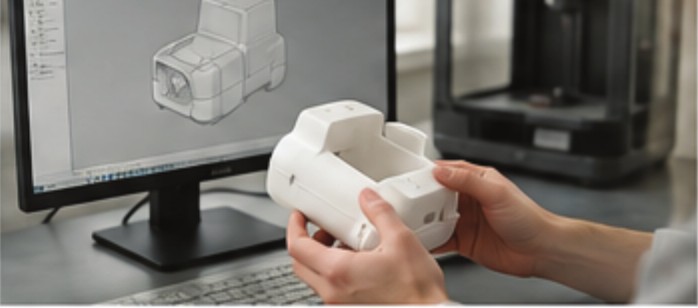
Why prototyping matters — Studio iD on how early physical models and functional prototypes catch design flaws before tooling and save weeks in product development.